Growing
Bacopa Monnieri (Water Hyssop, Brahmi): Comprehensive Cultivation, Processing, and Use Guide
Complete guide to Bacopa monnieri cultivation covering aquatic growing systems, bacoside chemistry, propagation, harvest optimization.
On this page
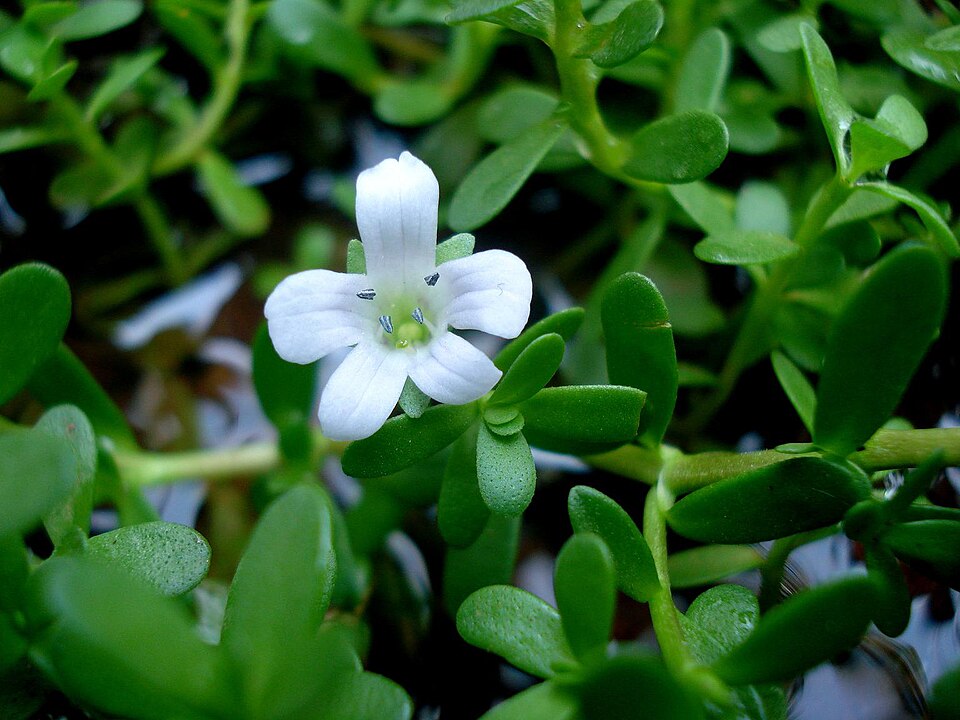
Bacopa monnieri is a low-growing, creeping, semi-aquatic perennial in the Plantaginaceae family. It forms dense mats of succulent, obovate leaves (1–2 cm long) on trailing stems that root readily at nodes. Small, actinomorphic flowers, white to pale lavender with yellow throats, appear singly from leaf axils during warm, bright periods.
The plant thrives at the interface of water and land. Its tissues are water-rich, and its growth habit reflects adaptation to fluctuating moisture, shallow inundation, and high light. Vegetative vigor is high; sexual reproduction occurs via small seeds but plays a minor role in cultivation compared with clonal spread.
In contemporary phytochemistry and neurobiology literature, B. monnieri is discussed for bacosides (notably bacoside A, a mixture of dammarane-type triterpenoid saponins), bacopasaponins, flavonoids, phenylethanoid glycosides, and alkaloids. Research explores interactions with cholinergic signaling, synaptic plasticity pathways, antioxidant defenses, and stress-response modulation, consistently framed within traditional use and whole-plant extract studies rather than isolated pharmaceutical claims.